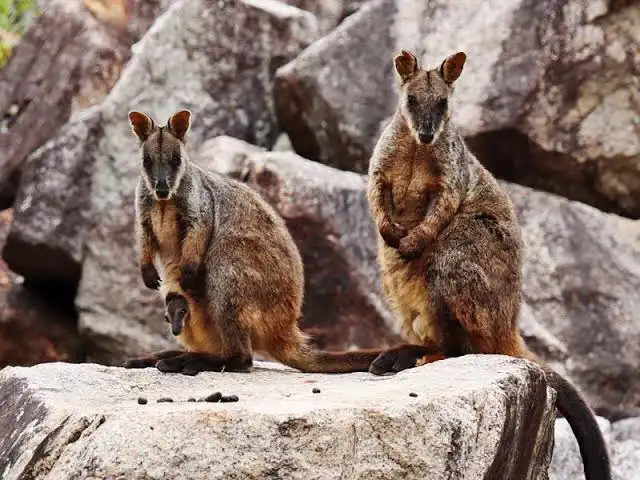
Editor’s note: The sanctuary featured in this post was originally known as Widgewah Conservation Sanctuary. It has since been renamed Barbaloot Reserve. References to Barbaloot Reserve throughout this post refer to the same location.
Ninety minutes north of Melbourne, a 400-hectare property sits quietly in the Murray region of North Eastern Victoria. Rolling hills, granite boulders, and a recognised biodiversity corridor called the Hughes Creek Landscape Zone. This is Barbaloot.
What Makes Barbaloot Reserve Critical for Wildlife Recovery in Victoria
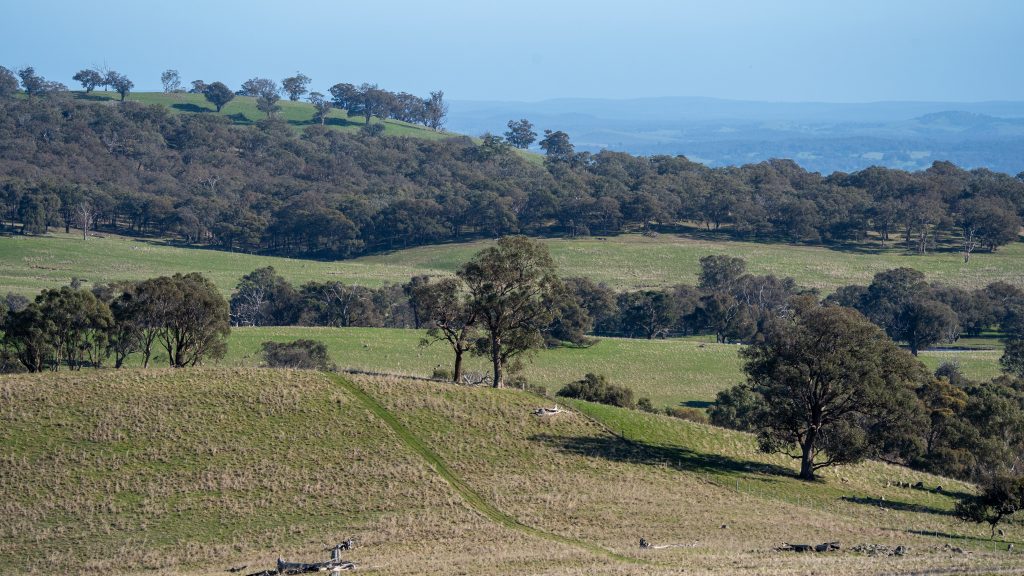
Like most of this part of Victoria, Barbaloot was cleared for grazing decades ago. Today, 83% of the region’s private land bears no resemblance to the grassy dry forest that once defined it. But that’s changing.
Barbaloot Reserve is restoring the land to its natural state, planting a diverse species mix reflective of the original ecosystem including Austral Indigo, Red Box, Drooping She-oak, Red Stem Wattle, Black Wattle, Silver Wattle, Lightwood, and Common Cassinia across the site. The project sits on the traditional lands of the Taungurung people, whose connection to this landscape spans thousands of years. Restoration here isn’t just an ecological act. It’s a return.
The Southern Brush-tailed Rock Wallaby: One of Australia’s Most Endangered Mammals
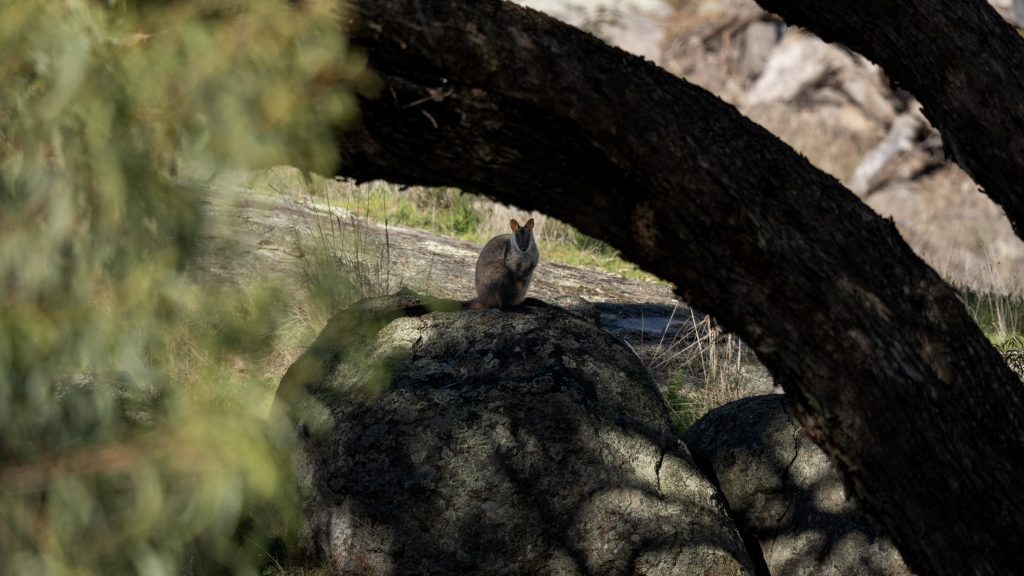
At the heart of this project is a creature most Australians have never seen in the wild: the Southern Brush-tailed Rock Wallaby.
In the 1990s, it was estimated that only eight survived in the wild. Today, despite decades of intensive conservation effort, around 50 remain in the wild, mostly at Little River Gorge in Victoria’s Gippsland region, with approximately 150 more held in captive breeding programs. Fewer than 200 individuals in total. It’s one of the most precarious situations of any mammal species in Australia.
These are striking animals: a long dark bushy tail, a white cheek stripe, a black stripe running from forehead to the back of the head, and heavily padded feet built for bounding across granite. Barbaloot’s rolling hills and granite outcrops are precisely the kind of country they’re made for.
The species faces threats on multiple fronts: fox attacks, habitat loss, genetic bottlenecks, competition from introduced herbivores, and the impact of a changing climate. The 2019-20 Black Summer bushfires nearly wiped out the entire wild population at a stroke. That’s why sanctuary sites like Barbaloot matter so much. They’re insurance as much as they are habitat.
Fortunately, Barbaloot was not impacted by the January 2026 Victorian bushfires. The population remains stable and the work continues. It’s a timely reminder of why a network of geographically spread sanctuary sites matters. No single fire should be able to undo everything.
What the Southern Brush-tailed Rock Wallabies Are Telling Us About Native Reforestation in Victoria
The return of native species to country that was stripped bare is a signal that restoration works. At Barbaloot, that signal is getting louder.
The population of Southern Brush-tailed Rock Wallabies at Barbaloot has now surpassed 30 individuals. Our planting partner LRX Group has confirmed that breeding is occurring on-site, which is a critical step toward re-establishing a stable population of the species.
Planting with Purpose: How Australian Businesses Are Funding Habitat Restoration
From fleet management to live music, events, and insurance, a growing group of Australian businesses has found common ground at Barbaloot. Their industries are different. Their commitment to restoring country isn’t.
Zurich Insurance has been planting trees with Reforest since 2022 with a simple but meaningful commitment: every new customer plants a tree. Since the program began, Zurich’s customers have contributed 3,577 trees, removing 2,764 tonnes of CO₂ and restoring 11.3 hectares of habitat for the Southern Brush-tailed Rock Wallaby. It’s a model that turns an everyday business transaction into something a customer can actually see.
Laneway Festival brought a different kind of energy to Barbaloot. In 2025, in partnership with Reforest and their audiences across Australia, Laneway planted 700 trees, restoring over 6,600m² of native habitat at the sanctuary and contributing directly to the wallaby recovery effort. Laneway’s sustainability program spans renewable energy, waste reduction, Indigenous-led conservation, and an artist-led impact initiative at Taronga Zoo. Their contribution at Barbaloot is part of a program that’s rewriting what the live entertainment industry stands for.
Custom Fleet, the premier fleet management company, has embedded sustainability into the core of its operations. Already having fully electrified their own internal ANZ fleet, they back their commitments with tangible action, including support for reforestation projects like Barbaloot. For Custom Fleet, it’s about more than reducing tailpipe emissions. It’s about demonstrating what responsible business looks like across an entire value chain.
Outstanding Displays, a Queensland-based exhibition and events company, operates by a simple principle: every display they build plants a tree. Their “Trees for Displays” program, combined with fully recyclable fascias made from paper and eco-board, means every client engagement contributes to Australian reforestation. It’s proof that sustainability doesn’t require a massive carbon budget. It requires a decision to do things differently.
MeetPat designs and installs drinking fountains and bottle filling stations across Australia, cutting single-use plastic one refill at a time. They’ve chosen to take their climate action further, taking responsibility for the CO₂ their own operations generate and actively removing it. MeetPat’s product already does good work. Their operations will too.
Logical Line Marking delivers the line marking that keeps infrastructure safe, efficient, and compliant, from car parks to factory floors. The connection between fresh paint on asphalt and a wallaby habitat taking root in Victoria isn’t an obvious one. But they made it real, planting a tree at Barbaloot for every line marking job they completed. It’s a reminder that no industry is too removed from nature to play a part in bringing it back.
Ready to Restore Country? Join the Businesses Already Making an Impact
Barbaloot shows what’s possible when businesses put their support behind something real. The businesses supporting the project aren’t waiting for the perfect moment. They’re already taking action and helping bring a species back from the brink and restoring country that was stripped bare decades ago.
If that sounds like the kind of impact your business wants to make, connect with our team to learn more.
